ZMorph Fab Reviews: See Why 0 Shoppers Rated It 0 Stars!
Everyone’s got opinions. We collected 0 of them to see if the ZMorph Fab 3d printer really earns that 0/5 rating.
 Supermod
 Moderator
 Recaptor
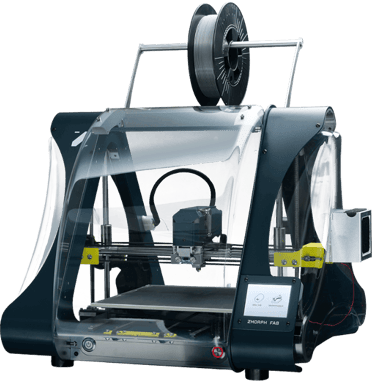
ZMorph Fab: A Versatile 3D Printer for Professional and Educational Use
The ZMorph Fab is a distinctive all-in-one 3D printer that caters primarily to professionals and educators who require versatility and reliability. Released in 2020, this model targets users at an intermediate to advanced skill level, promising a refined balance between accessible features and high-end capabilities. Designed for applications such as prototyping and engineering, the ZMorph Fab offers a multifaceted approach by supporting both traditional FDM/FFF 3D printing and additional CNC and laser functionalities through upgrade paths. With its prebuilt design and a solid warranty backing, the ZMorph Fab stands out as a robust contender in professional-grade 3D printing solutions.
Detailed Specs & Features
On paper, the ZMorph Fab is engineered for durability and precision. It operates within an acceptable temperature range of 64-86°F, with a compatible power supply voltage of 100-240 Volt internally powering the device. The build volume is quite sizeable at 874 cubic inches, translating to physical build dimensions of approximately 9.25 inches width, 9.84 inches depth, and 6.49 inches height. This gives users ample space for moderate to complex printing projects without constantly needing to scale down designs.
The hardware features a 5-inch touchscreen display with a resolution of 800x480 pixels, facilitating intuitive operation and fine control during printing. Underneath the build plate, which is made of removable glass with a smooth surface texture, lies an auto-leveling sensor that works in conjunction with manual bed leveling options to guarantee a well-calibrated print surface. These technical specifications provide a real-world advantage by minimizing print failures through precise leveling and setup.
The printer supports a single direct drive extruder capable of reaching a high maximum temperature of 482°C, allowing compatibility with a variety of filaments such as PLA, ABS, and PETG. The nozzle diameter is standard at 0.4 mm but supports optional sizes ranging from 0.2 mm to 0.8 mm, which implies flexibility in printing resolution and speed. Quick-swap nozzles and replaceable hotends add to the machine's maintainability and adaptability, boosting its longevity and operational ease.
Moving to performance metrics, the official max print speed stands at 150 mm/s, yet its measured effective printing speed is closer to 80 mm/s. This is a realistic speed for achieving quality output without sacrificing detail. Accordingly, the time to print the well-known benchmark model, Benchy, is approximately 90 minutes, reflecting both efficient and reliable print timing for professional use.
User Experience & Performance (Based On Specs)
Design & Build
The printer's dimensions, 20.5 inches wide, 19.7 inches deep, and 17.7 inches high, combined with its robust frame type, classified as Cartesian, convey solid mechanical stability in daily use. While it's an open enclosure design, it operates safely with CE, FCC, and RoHS certifications. It includes critical safety features such as an emergency stop button, overheat protection, and auto-shutdown on error. These elements instill confidence and trust in its operation, especially in educational or professional settings where safety compliance is non-negotiable.
Performance
The printer's layer resolution ranges impressively from a minimum of 50 microns to a maximum of 400 microns, guaranteeing fine detail when required and faster prints when precision is less critical. A print success rate of 90% is notable here, indicating a high level of reliability when following the precise calibration procedures supported by auto bed leveling and manual adjustments.
Additionally, the printer's print quality rating of 8 out of 10 suggests excellent fidelity for professional-grade parts. Cooling fans help stabilize extrusion, reducing warping, and the printer features power loss recovery, which ensures printing resumes seamlessly after interruptions; a vital feature to reduce wasted materials and time.
Materials & Compatibility
With support for common filaments like PLA, ABS, and PETG, the ZMorph Fab covers most user needs well. However, it lacks support for multi-material printing and resin types, focusing specifically on FDM improvements. The fact that third-party materials are accepted provides flexibility in sourcing filament, although the requirement for filament drying introduces an additional step that some users may need to manage carefully. The absence of filament auto-loading or dry box options means users must take extra care to prepare materials, especially in varied environmental conditions.
Connectivity & Software
Connectivity comes via USB, LAN, and SD card, which provides a solid balance of wired options for file transfer. However, the absence of cloud-based software and remote monitoring limits its appeal in networked or distributed print farm environments. Required use of proprietary software, including Z-SUITE and slicers like Cura, ensures compatibility but may lock users into a particular ecosystem. Firmware updates are supported but only manually, which means users have to be proactive in maintenance.
Pros & Cons
Pros
- Versatile compatibility with professional-grade filaments and multiple nozzle sizes
- Robust safety certifications combined with essential safety features
- Reliable power loss recovery and auto/manual bed leveling for a high print success rate
- Expandability with laser and CNC toolhead upgrades
Cons
- Limited to single-material FDM printing, no resin or multi-material functionality
- Lacks energy-saving mode and filament auto-loading features, requiring more manual preparation
- No remote monitoring or cloud management limits use in modern connected workflows
Price & Value For Money
The ZMorph Fab is priced at $4700 at MatterHackers. Given its one-year warranty, extensive safety certifications, and internal power supply capable of supporting a range of professional filaments, the pricing feels aligned with the hardware's quality and versatility. While it may not fit every budget, particularly in comparison to entry-level hobby printers, it holds strong value for professional users who benefit from the direct drive extruder and modular upgrade options for laser and CNC. Users seeking resin printing or multi-material capability might find the cost hard to justify.
Quick Take
In short, the ZMorph Fab excels as a multifunctional 3D printer with solid print quality and respected safety features, perfect for rigorous prototyping and educational purposes. If we look at the numbers alone, its print volume, precision, and upgrade possibilities make it a smart choice for users who prioritize adaptability and sturdy construction over cutting-edge software connectivity.
Closing Recommendation
The ZMorph Fab may be ideal for users who seek a dependable single-extruder 3D printer with the potential to grow through modular upgrades. It appears to perform best in professional workshops or learning environments where precision and safety certifications matter most. For those requiring print farm management or multi-material printing right out of the box, alternative options may be more fitting.
Verdict
Rating: Based on the specifications and overall feature set, we believe ZMorph Fab deserves 4.3 out of 5.
- Winner Feature => Robust safety certifications combined with a versatile build area and modular upgrade paths.
- Needs Improvement => Limited multi-material and remote connectivity features restrain some modern user needs.
Reviews 0
The good, the bad, and the brutally honest.Average Rating

More 3D Printers 453
Unlock more awesome finds.